
Building for the Coast: Why Marine Environments Demand Better Hardware
The Truth About Building on the Coast
When you look at the structural frameworks along the rocky South African coastlines, you realise how quickly the ocean environment can destroy a beautifully designed project. A development may have the most brilliant architectural blueprints in the world, but if the hardware used to secure those structures is of poor quality, it is like building a house of cards that is fragile. The salt spray, the constant wind and humidity create a highly corrosive atmosphere which attacks metal aggressively. Standard mild steel fittings can start to rust within weeks of installation, and the initial structural integrity is completely compromised. The coastal environment is unforgiving, and it will quickly reveal any weaknesses in a builder’s supply chain decisions. Taking shortcuts on these critical elements ensures early failure and expensive site revisits.
Fighting the Elements with the Right Stuff
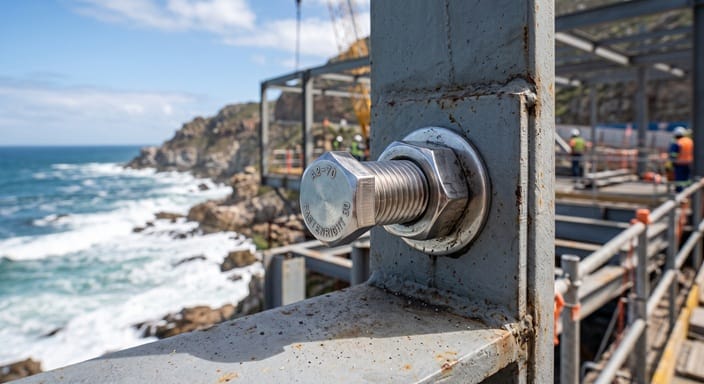
Standard construction techniques just don’t work when you’re working near the ocean; the environment is actively trying to tear the structure down. Every exposed joint is a potential point of failure due to the high moisture content in the air. That’s why the inclusion of marine-grade stainless steel fasteners, which are sold at fastenright, are a must for any serious coastal development. If you’re building commercial beachside pavilions or private timber decks, the hardware that forms the foundation has to be totally resistant to oxidation. Project managers are always advised to source their materials from a trusted supplier of stainless steel bolts and nuts in South Africa to ensure that their materials meet exact engineering specifications. The cheap options may save a tiny fraction of the initial budget, but the eventual structural repairs will cost a lot more in the long run. The ocean never stops working against infrastructure, and that’s something to remember, he said. And you’ll have peace of mind for years to come knowing you protected your financial investment with premium materials from day one.
The Unseen Costs of Compromise
It’s a surprisingly common mistake on construction sites to find contractors incorrectly mixing metal types when constructing structures. This is normally caused by galvanic corrosion from using a galvanised bracket and normal iron screws. Once the chemical reaction starts, the metal begins to degrade at an alarming rate, transforming strong connections into brittle liabilities. To avoid such corrosion, each part of the fixing assembly has to be carefully considered. Consistency is the key, from the heavy-duty stainless steel anchors that lock the base plates into solid concrete to the precision washers that spread the clamping load. Even the tiniest stainless steel rivets and pins are critical to maintaining the overall mechanical integrity of the build. It is so frustrating to see a huge financial investment compromised simply because a contractor chose to cut corners on the hidden hardware. When a structural joint fails in a high-wind zone, the consequences can be truly disastrous for all concerned. The number one priority on any construction site should always be safety.
Designing a Sustainable Solution
Sometimes a strange design problem cannot be solved with normal off-the-shelf components. Modern-day complex designs tend to develop that require very specific hardware configurations to handle unusual load distributions safely. These are super technical situations that mean the difference in the world when you have direct access to local custom manufacturing capabilities for project timelines. This means bespoke threaded rods or specialised brackets can be ordered directly from a facility in Cape Town, avoiding long international shipping delays that can derail an entire construction schedule. Coastal construction means extraordinary foresight, constant quality control and materials that simply won’t give way to the aggressive elements. If a marine project is going to truly stand the test of time, it absolutely has to have hardware built for battle.


